
A Social Media Content Revision Process Should Have Rules
If you’ve worked at a social media agency, you know how a “small revision” usually starts.
The client asks to change one sentence.
Then the designer updates the graphic.
Then the client wants the old headline back.
Then someone asks whether the caption was updated too.
A single post that should have taken 30 minutes is suddenly taking two hours.
The problem isn’t that clients request revisions. Revisions are a normal part of agency work. The problem is having no defined process for handling them.
A good revision workflow makes three things clear:
What needs to change
Who is responsible for changing it
When the revised version is ready for approval
1. Start With a Clear Brief
Most revision problems actually begin before the first draft.
If the writer or designer doesn’t have enough information, you’re almost guaranteed to get subjective feedback later.
Before production starts, define the essentials:
Campaign objective
Target audience
Key message
Brand guidelines
Required CTA
Visual direction
Platform requirements
Client-specific restrictions
The more decisions you make before production, the fewer decisions the client has to make during review.
A client shouldn’t be discovering the strategy while reviewing the finished post.
2. Keep Feedback Attached to the Content
Avoid collecting revision requests across email threads, Slack messages, screenshots, and phone calls.
That creates a dangerous question:
Which feedback is the latest feedback?
Instead, feedback should live alongside the specific piece of content it refers to.
If the client says, “Change the headline,” your team should immediately know which post, which version, and which headline they’re talking about.
This becomes especially important when an agency is managing dozens or hundreds of posts across multiple accounts.
3. Separate Revision Rounds
Not every revision should trigger another completely open-ended review.
A practical workflow is:
Round 1: Internal review
Your team checks the post against the brief before the client sees it.
Catch obvious problems internally. Don’t make the client your QA department.
Round 2: Client review
The client reviews the finished content and submits feedback.
Ideally, ask them to consolidate feedback into one review rather than sending changes throughout the day.
Round 3: Final approval
Your team makes the agreed changes and sends the updated version for confirmation.
After approval, the content moves forward.
This structure prevents the process from becoming an endless conversation.
4. Define What Counts as a Revision
This is where agencies often lose control of scope.
Changing a typo is a revision.
Changing a CTA because it doesn’t follow the approved brief is a revision.
Deciding after approval that the entire creative concept should be different is not the same thing.
Your team needs a clear distinction between:
Revision: correcting or adjusting the agreed deliverable.
New request: changing the direction, strategy, or scope after the work has already been produced.
You don’t need to fight clients over every change. You simply need a system that makes the difference visible.
5. Use Version Control
Never let your team work from files called:
final.png
final-2.png
final-final.png
FINAL-USE-THIS-ONE.png
It sounds ridiculous, but agencies still lose time this way.
Every revision should have a clear status or version. Once a new version is created, the previous one should no longer create confusion.
The goal is simple: everyone should know what is current.
6. Connect Revisions to the Rest of the Workflow
A revision shouldn’t disappear into a separate communication channel.
When a client requests changes, the right team member should receive the task. When the work is updated, it should return to review. Once approved, it should move toward scheduling and publishing.
This is where GoGoHype fits naturally into the process.
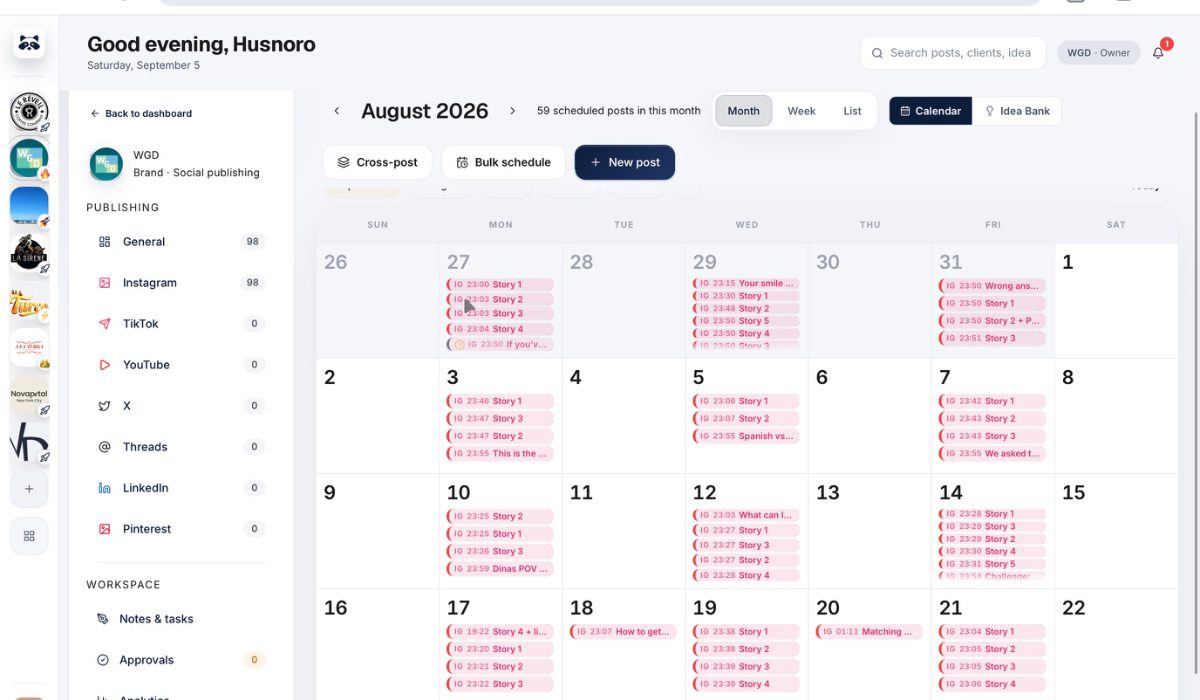
Instead of managing client content, feedback, team tasks, and publishing as separate workflows, agencies can keep them connected in one place. Content can move through approval stages while the team handles revisions and prepares approved posts for publishing across 8 social platforms.
That matters because the real cost of revisions isn’t just the extra design or writing time.
It’s the handoffs.
Build a Process That Doesn’t Depend on Memory
A strong revision process shouldn’t require an account manager to remember which client approved which version three days ago.
Build the workflow once:
Brief → Internal Review → Client Review → Revisions → Final Approval → Scheduling → Publishing
Then make every piece of content follow it.
You won’t eliminate client feedback—and you shouldn’t try to.
You can eliminate the unnecessary chaos around it.
If your agency is spending too much time chasing revisions and figuring out which version is current, GoGoHype can help you bring the process into one organized workflow.